

Corsica, 2026
Corsica is simply mind-blowing. I’ve been on a lot big ferries before but the seas were rough enough yesterday to both cause a few ferry crossing cancellations and cause quite a bit of ship rolling in the waves feeling as we crossed yesterday, with any excursion away from the sidewall handrails was a game of chance as the ship rolled from one side to another.
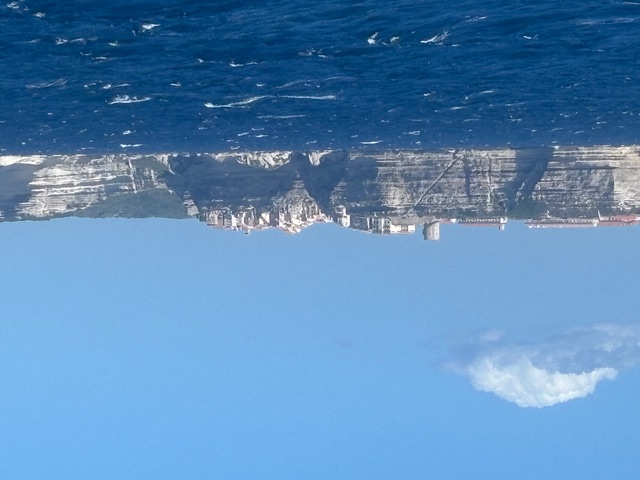
Corsica is 12 miles from Sardinia, French not Italian. You think ‘so close, probably overlapping experiences’ but that sentiment could not be more inaccurate.
It’s a medieval city, or before, preserved and existing like it did then. I mean, I literally feel transported back in time to Napoleon, Mozart, and Columbus. The city has been here a long time. Good travel is like that - it can blow you away with differentness and time transport and interestingly, while Sardinia was fun and beautiful and I’d go back in a second, this place is wow magical. And I’ve just got here.
I’m on top of the limestone cliffs in Bonifaciio. It’s a walled city, Genoaese for a long time, then French, just before Napoleon was born and why he is French and not Italian. I know we live in annoying times, but compared to the flux and uncertainty of the political climate these Corsicans have gone through, we are privileged indeed.
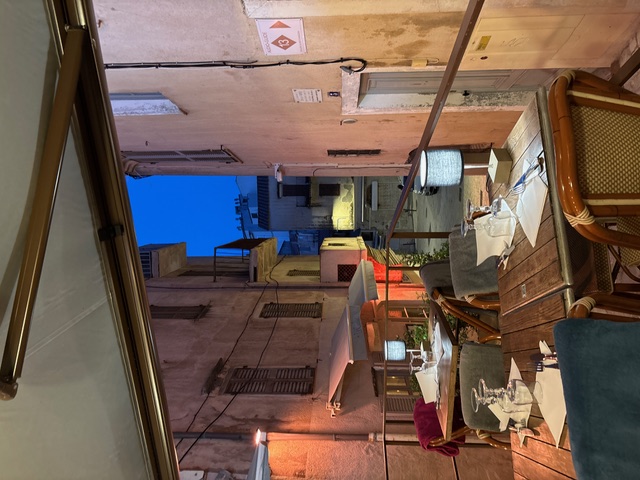
The weather controls to not cooperate, and not cooperate in varied ways. Yesterday was sunny enough but the winds were literally 30mph or more all day long. I think of the two weeks I’ve been here, there has literally been 2 days of calm and sun. I’ve mentioned that this really hasn’t curtailed or impacted my plans but it has eliminated pool days, beach days and a lot of just comfort relaxing outdoors.
I plan on playing some golf here, on an oceanside course. And doing some hiking, maybe a lot of hiking. The trails are everywhere and hug the coast many times.
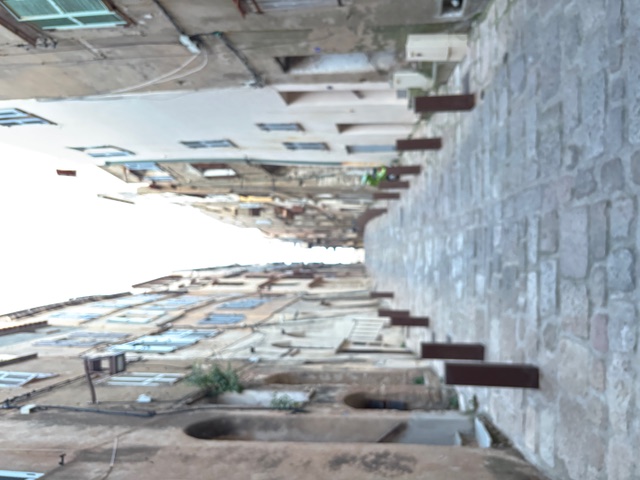
A bell rings from the citadel nearby. It’s 7am and it’s ringing in a continuous back and forth rhythm, accelerating and slowing, speeding and slowing. It went on for a minute.
I have a large suitcase and a large motorcycle bag, a travel back pack and an excursion pack. I think I’ve packed well, and I don’t think I’d change much. Even when I’ve been forced march around an airport or from the ferry to the car rental place, I’ve been able to move with fluidity. The large motorcycle gear bag has wheels and a handle and has been a game-saver - having all that in a large non-wheeled duffle bag would have been a problem for the commutes I’ve done.
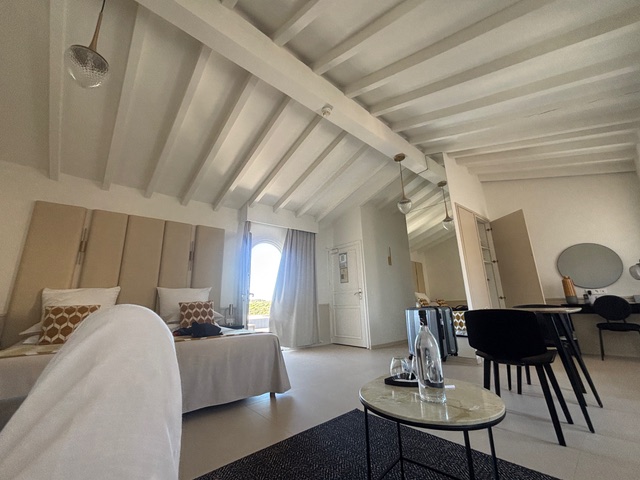
Just getting off the ferry yesterday where the taxi man said the car rental place was 200 meters, turned out to be more like a mile along uneven cobblestone paths, worked out fine. Hardy, quality bags with wheels that work. All in all, the planning for the trip has been on point.
It’s funny how I travel. Pick a point on a map and go. Then fine-tune the decision with a close but not to close study of hotels and transport. Learn the airport codes, the towns, and then arrive and see how I did. Typically pretty well. I can’t remember the last bust. But that’s really just a matter of perspective as well - On my travels the lost luggage delayed flights poor airbnb hosts questionable weather aren't ruinous affairs but just the cost of doing business if you are going to travel. But like I've said, me and my travel guests have been blessed for years now with good weather for what our activities are - warm and dry on the beach, snowy and cold on the slopes. Even when it's been off a bit or a lot, a few times we the weather turned towards us as the trip progressed, notably a 24" snow storm in the Alps at the end of 2025 ski season.
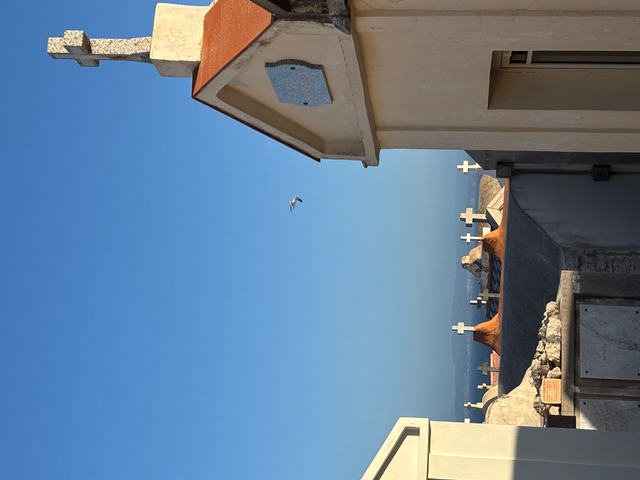
A very old labyrinth of a cemetery perched on some very premium water front
Italy, part 3
I seem to be in Sardinia and soon Corsica before the summer travel season really hits. I guess the season here in Northwest Sardinia is quite condensed to July and August and definitely doesn’t extend to the first part of May. When my nephew and I visited Nice and related areas two years ago, I think it was late May and Early June, and when we hit the French Alps last year to ski it was the middle of April, just as the ski season is coming to an end.
While there are some inherent risks for visiting outside the most common dates, mostly weather related, if the weather cooperates I’m a big fan of the vibe.

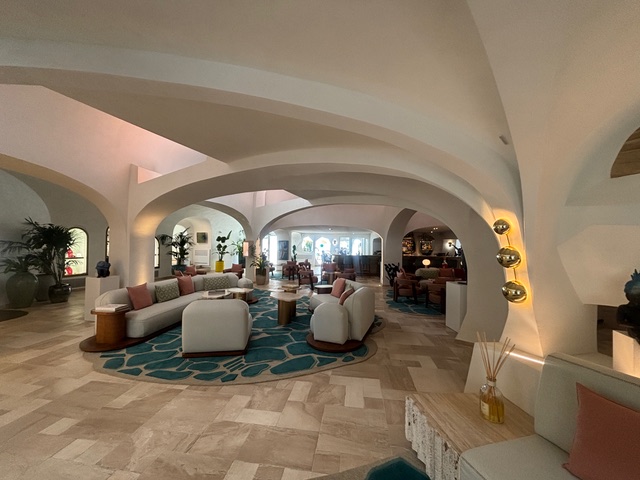
Currently, at the W at Poltu Quatu, the hotel on a small short inlet just off the Tyrrhenian Sea, the place seems fully staffed but the guests have not yet arrived. It’s a nice hotel, and has pulled off the art of luxury well in both the accommodations as well the attentiveness of a well-trained staff. So you have a perfect mix of lots of help, well-trained, and a lack of guests. While that could be overshot in terms of helpfulness at every moment of need like a Stowe ski slope, they are restrained. While you can hardly go into the pool without your lounger towels being swapped out, hardly turn a corner without a friendly face, you can also sit quietly without a constant stream of helpfulness effort.
In the Alps, in Mid April, the vibe was decidedly end of season, with lots of skis and boots being cleaned on the sidewalks outside of the ski rental stores, and with stories from the service workers on the slopes of their plans to head south to the French Riviera, the Côte d’Azur, for the summer. That’s why when we got hit with 20” of snow a lot of places were a bit surprised and were caught off guard in terms of food on hand and staff on hand as a late rush of skiers converged.
And Nice in late May was just nice. Perfect really. Crowds picking up, sun warm, but again not the hordes you read about.
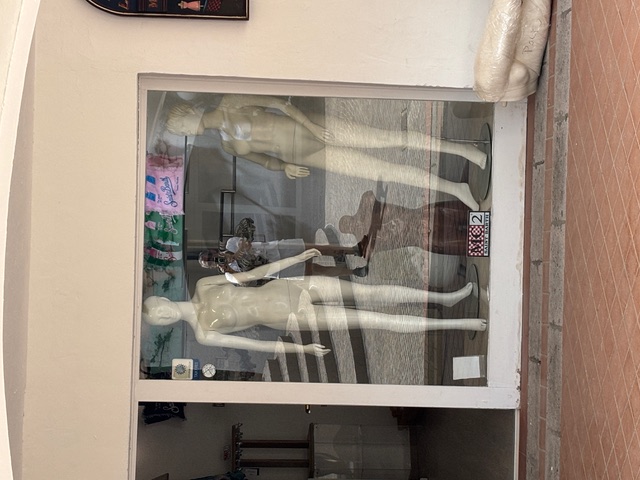
So early in the season even the mannequins are undressed.
In the little towns I’ve been to in Sardinia that must explode in the Summer, it’s hard to imagine the chaos of traffic and guests. It must really be a scene.
I’m trying to leave Sardinia today after 12 days but it looks like that might be difficult since the high winds are preventing the ferries from running from Santa Theresa to Bonifacio, Corsica. I was thinking about staying a few days in Bonifacio and then heading to Mainland Italy via Milan or Rome, but now I think I might just stay put and play some golf.
Sardinia in early May, at least this year, has been a varied and turbulent weather situation. Chilly, rainy, windy, less sun than you would expect. It’s fine for me, and hasn’t really impacted my travels, but if you were coming for a sunny warm-me-up holiday, you would have been disappointed. While not unheard of, I think the last few years have been warm and calm in early May, setting up some short-term memory loss of how it can really be.
I can’t imagine a life less like residential home building in the USA than shepherding sheep in Sardinia. We passed a lot of sheep, and a lot of sheep dogs and a few shepherds. Most of the cows, goats and sheep wore bells around their neck I suppose to help keep track of them and in the country-side, when the motorcycles were turned off, the sound of hundreds of bells broke the arid, hilly countryside silence. It was soothing, hypnotic. Anyways, the shepherd’s life is a quiet life of roaming grazing sheep. Even a farmer’s life has exponentially more must-dos and anxiety than a shepherd. And compared to the endless lists and expectations of a builder, literally nothing seems more opposite. For us business-owners, whose obligations are not always self-imposed, self-initiated or voluntary, and can come at you for years and decades like water from a firehose, the idea of following sheep around is both abhorrent and attractive.
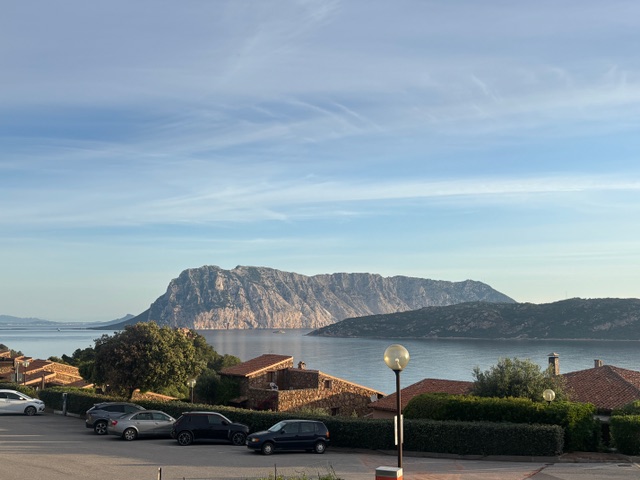
Was also, on my solitary motorcycle seat following a gang of 12 up and down and in and out of the incredibly varied countryside, contemplating the black sheep that every flock-fold-mob-band of sheep had. One can see the where the saying came from, since I guess the black sheep is 1, quite infrequent, and 2, stands out.
From Claude, who has replace Chatgpt for me.
The "black sheep" in a flock comes from genetics — specifically a recessive gene for dark pigmentation.
Here's how it works:
The genetics — Most domestic sheep carry genes for white wool, which was selectively bred over centuries because white wool can be dyed any color (making it more commercially valuable). However, some sheep carry a recessive gene for dark (black or brown) pigmentation. When two sheep that both carry this hidden recessive gene mate, there's a chance their offspring will express it — producing a black lamb, even from two white parents.
Why it's rare — Because the dark-color gene is recessive, both parents must carry a copy for it to appear. Since white wool was heavily favored by farmers, the gene was largely bred out, making black sheep uncommon but not extinct.
It's essentially random — A white ewe and a white ram can produce a black lamb with no warning, which is why the birth of a black sheep often surprised shepherds. This unpredictability is exactly what gave rise to the idiom "black sheep of the family" — someone who stands out unexpectedly as different from the rest.
Interestingly, black wool was historically considered less valuable (harder to dye), so black sheep were sometimes seen as a minor nuisance to shepherds, reinforcing the negative connotation of the phrase.
I don’t mind Chatgpt, but it was annoying how before every answer it felt the need to editorialize and contextualize what it was about to report. For awhile, that was actually helpful, but then it got really annoying.
To kill some time I uploaded all my weekly financial reports I get from John in finance, and after some very smart questions and clarifications, Claude reported the following, about my overall financial picture -
"Overall, the combined picture is that of someone who has built substantial, well-structured wealth with almost no leverage. Very solid." I could not have said it better myself, even if the day to day still seems more tenuous than it should. Kind of like a zebra in captivity - never really loses the fight or flight instincts. They are backed at this point.
Sardinia, Part 2
The pilots and flight attendants of ATI (Air Italy) pronounced must less frequently over the plane’s public address system than their American counterparts. Gone were the weather reports, the friendly greetings, the mid-flight updates and the arrival and departure details, other than those necessary to the business at hand. Since these announcements are typically inaudible, loud and ignored, it was a fine respite from the unnecessary.

Unnecessary to date is any need to check my email for 10 days. I keep two primary inboxes - my personal Apple and my corporate. I spent and spend a fair amount of time and diligence in my personal box keeping it free of clutter and spam and it works for the most part but I still get a lot of email, but it’s typically quick to go through on that side or things. My company’s inbox is another matter and to a testament of which I have crowed about more than once, the men in the office for the past week have mostly insulated me from any dire urgent and emergencies. I’m sure they are out there, I’m sure they are happening, I’m sure there is more than one grenade sitting in the inbox, but to date, they haven’t needed my intervention.
I think maybe this coming Monday I might wade into them. Being 6 or 7 hours ahead, I can spend a few hours in my time zone addressing, commanding and leading, then go about my breakfast and pool routine first in North Sardinia at the W and then in Southern Corsica in Bonifacio.
The primary initial reason of why I am in Sardinia is to embark and accomplish at 1000+ mile motorbike ride with a company named bikerbnb.com. They offer tours in the Scottish Highlands, Spain, Sardinia and Morocco. 5 days, 4-6 hours a day on the bike, with curated routes that include a lot of technical and curvaceous roadways, and a fair amount of non-paved surfaces ranging from sand to gravel to compacted dirt. The riding averaged under 70km an hour and many times much less because of the nature of the roads selected - twisty, turns, steep ups and steep declines. Small roads that demanded attention and care. We started in northeast Sardinia, traveled south, then west across the island, north and then east, crisscrossing the island in unusual ways.
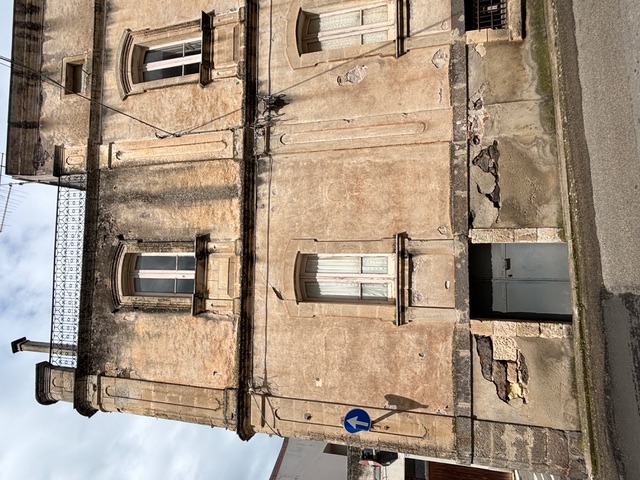
I’m not sure they is a space as small as Sardinia that packs the diversity of landscapes that this island does. It’s not a small island, but once you calculate the terrain changes from coast to desert, to agriculture to forested mountains, it punches far above its weight in terms of unexpected environmental diversity.
For the first time in years, the weather didn’t fully cooperate on one my weather-dependent trips. Be it skiing out west and up east, overnight bicycling, and a myriad of other events, excursions and activities that are impacted in part or in full by the weather, I’ve been sailing on an uninterrupted run of good fortune. That changed here, in a very unusual and improbable fashion.
First, it was chilly. Especially once we left the coast. Two, the sun hardly came out with 1, made it feel more chilly, and 2, left a cloud cover that threatened rain. So while I was looking to warm my chilled northeast bones, I was left layering up and thankful for the overpacking of base layers, a few which I loaned out to others not so well-prepared. We skirted storms for a few days but our luck ran out on Wednesday where after a long lunch, our remaining two hours of riding was through a downpour and low 60 degree weather. Few things are as not fun as that, especially then checking into a hotel in a rural area and hoping to find a dryer to dry out for the next day.
We did successfully dry out with the tag team combination of hotel dryer and hotel room blow dryers. My room’s blow dryer had never seen such a workout drying out my boots and gloves and helmet.
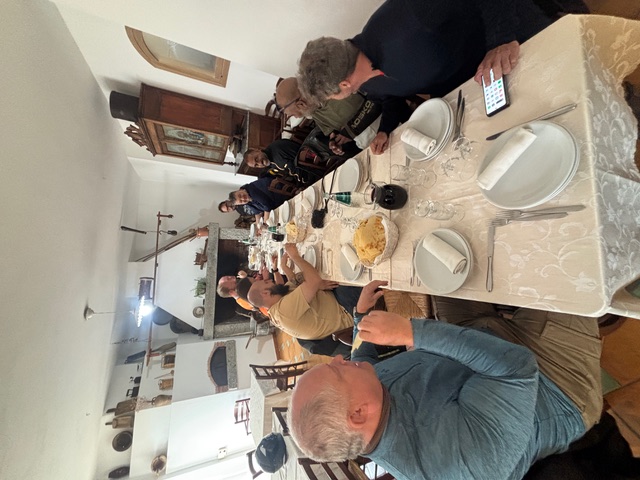
Even the next two days were overcast, and now Saturday morning, it’s clear and back to the weather one expects of Sardinia and thankfully I have an another week here to suck this sun up.
I was reading Farewell to Arms, the Hemingway WWI classic, and somewhere he referred to a trade route in Spain or similar that propelled goods, ideas and knowledge. And it made me recall all I learned about the Eric Canal last summer. The push of goods, ideas and knowledge. The foundation of cultural expansion.
I watched Back to Future on the airplane over, the first and original, and I enjoyed it. But what caught my attention was a quick, a very quick, capture of the villains who were out to murder the eccentric scientist - and low and behold they were the head scarfs of an Arab or Palestinian and it reminded me of the very true insight I read or learned that the philosophical makeup up of Hollywood rarely depicts Arabs as anything other than villains, comedic, tragic and untrustworthy. It is, and always has been, that way. A little dirty, always untrustworthy, typically simple-minded and parochial. One of the few tripes you can get away with these days. Why you never see sympathetic documentaries or sympathetic storylines.

Lots of small cars here on the island. Doesn’t look like many people are taking out 6 years, $1000 a month car payments, stealing their future wealth for odd cosplays of superficial and for the most part, false wealth impressions. Also, a notable number of young men with their leg missing below the knee, with those bionic legs with shocks and curved aluminum bottom section - I attribute it to the moped and small motorbike culture - the lower leg is the first to go in an accident where the leg gets hit or trapped under a sliding bike.
Traveling well is the only way I travel anymore. If the effort to get there and back can’t be done in style and comfort, count me out.

Italy
It’s around 10:30pm Eastern Time, but I’m somewhere over the Atlantic, perhaps over mainland Europe now, listening to Karol G, on an aging ITA (Air Italy) airliner, up front in business class, with my business class slippers and my business class wine and my business class lie flat seats. Just finished watching Back to the Future. Should be landing in a few hours, collect my luggage and then recheck in for the flight to Olbia Sardinia where I’m spending the next 10 days. Then four in Corsica, thenn another 4 in either Milan or Silicy - haven’t decided. Away nearly 3 weeks. I should come back to full-on spring weather, as opposed to the teasers here and there we’ve been getting for the last month. I think the dollar has lost value against the Euro - things are more expensive than I planned.

I leave with a dozen projects rolling full-steam, with little in the way of slowing down in my absence. I worked hard to get our projects to a place where uninterupted progress could continue, but not to the stages and phases that I’m uncomfortable going through and past without my personal inspection. No one knows construction like me. I’m literally an expert on everything from human falability to Murphy’s Law to been-there-done-that problems to avoid.

We rolled into contract on a new Ranch in Narrowsburg. The house will be finished in June or July and sold as soon as it is complete. I have a lot of spec homes going up or complete, so if we get those sold this year, it will be a big year. I’m having deja vu as I write this so maybe I said the exact same thing in a previous recent post - wouldn’t surprise me, it is front of mind considering all my cash I have on the street right now. 2 completely finished homes, 2 mostly finished, and 1 half done. Completely tempering that risk is a half dozen projects that are ‘pay as you go’, meaning cash flow friendly.

I haven’t seen any Iran-related price spikes other than the day to day gas tax we are currently paying - everyone is feeling it, but as the top of the food chain, I’m expecting to start hearing about possible price increases. Can’t see how we can’t. Maybe I’m the last to hear since we have so much pricing power with our subcontractors and vendors that they can raise their prices on smaller relationships but not risk it with us. My best guess is that everyone is sitting around wondering how long it will last -this spike. If not too long, then we all will just eat it. If longer, then there will be a lot of tough conversations to be had. Hope the Trumpers are happy.
I’ve been hearing more and more about the cost of living. Fuel, gas, taxes, groceries. The average family is getting crushed and bled. Not sure where all this leads. Consumer debt. Creeping credit card debt. Home equity loans. Personal loans.

One of the weirdest things I’ve come across in awhile is the fact that Venmo payments are default set to Public. Why would a payment app default to public, since us older people it takes awhile to realize that everyone can see what you are paying everyone else. I know more than one politician has gotten in trouble for sending some money out and someone noticing some interesting payment recipients. I know I don’t want people to know who I’m paying, but I found that out a little late to avoid some embarassment or overlap in my dating life. I mean, what can i say, I’m a player. Not really, but a guy can dream.

In the Big Beautiful Bill, the federal government limited the amount of money a person can borrow for graduate school from public sources. Very smart legislation, and it will cause college-goers to avoid schools they can’t afford, will help avoid college as playland with long debt hangover, will force applicants to do a return on investment analysis, which is a good thing. Hiding out in grad school to avoid the big scary world may seem like a good idea, but not after you start getting the loan payback notices. I hear the job market sucks for new bachelors degree grads, and the article on loan limits tied the detour from grad school to job market as one reason for the more competitive job-seeking market. Add in AI, and I can see where the problem is. Still a ton of opportunity in small business for a well-rounded common sense applicant.
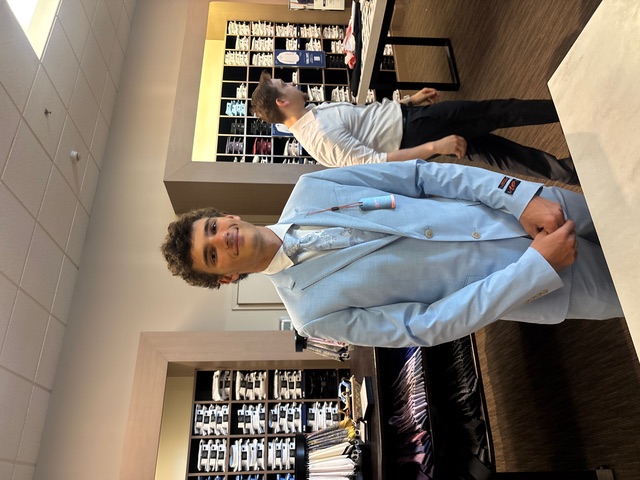
Lucas Petersheim getting sized up for a nice suit for the prom in a few weeks. It's a senior prom, he's only a junior, but one of his friends is taking him since he's pals with a lot of seniors.

Love the smoking areas in the Rome airport (FCO). A bit claustrophobic but very well ventilated. I also really like when I'm planning a trip somewhere new and get intimate with the airport code, forever etched in the Old Memory.


